History, culture and exile: Sikhs and Hindus in Afghanistan

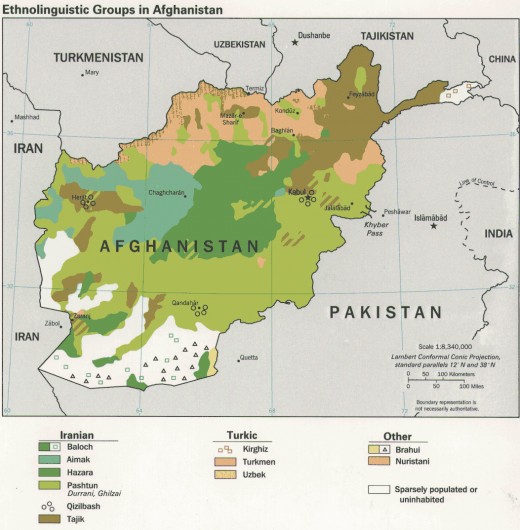
Afghanistan's ethnic and religious mix
Afghanistan is a country with a great mixture of ethnicities and religions. Almost all Afghans are Muslim, but there are small (much diminished and diminishing) Sikh and Hindu religious and ethnic minorities.
Afghanistan has four major ethnic groups, Pashtun, Hazara, Tajik, and Uzbek.
There are a large number of other minorities based on tribal, linguistic, and cultural differences, and there are the very small non-Muslim minorities.
No-one knows exactly how many people live in Afghanistan or much else about them. No proper censuses have been carried out for many decades.
The country has a population of about 31 million people, who are overwhelmingly Muslim in religious terms, although diverse in language and culture. It is estimated that 80% of the population is Sunni Muslim, and 19% Shi’a Muslim.
The current number of Sikhs and Hindus in Afghanistan is difficult to judge but estimates range from 2000 to 3000 in total.
There is a small number,
perhaps 500, Baha’is, and a small, very underground, Christian
community, which might be anywhere from 500 to 10,000 strong. There is also one Jew, living in Kabul.
Interesting books about Afghanistan

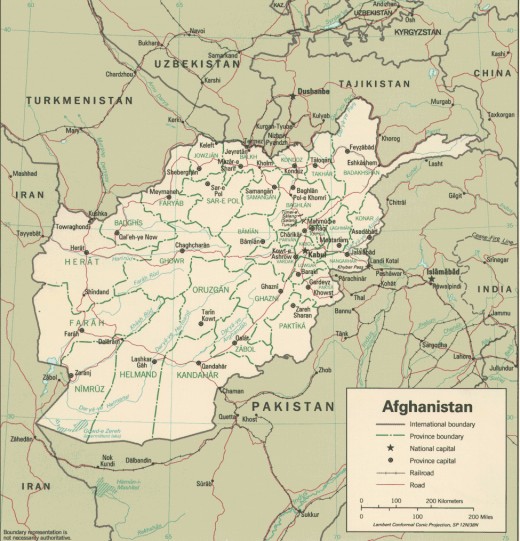
Afghan Maps
History of Afghanistan
Afghanistan has, for many centuries, been a battleground.
It has been caught in the middle of warring powers, and was an important element in the “Great Game” in Victorian times.
Britain recognised Afghanistan as an independent monarchy in 1921, and the country was ruled by King Zahir Shah from 1933 until 1973, when he was deposed in a coup.
In 1978, a communist coup was carried out in Afghanistan; there has been continuous conflict and violence since that time.
The USSR invaded Afghanistan in 1979, and withdrew in the end in1989, having been attacked fiercely by the Mujahideen.
The communist government lasted until 1992, when it was overthrown by the Mujahideen. The Najibullah government was the last communist government in Afghanistan.
The Mujahideen battled and warred in Kabul until 1995, and were evicted by the Taliban in 1996.
Most of Afghanistan was then in the Taliban’s hands, apart from parts of northern Afghanistan which were controlled by the Northern Alliance, a Tajik-dominated coalition of Mujahideen commanders and supporters.
After the terrorist attacks on the 11th September 2001, the United States and Northern Alliance allied to remove the Taliban regime.
Northern Alliance forces took over Kabul in November 2001, and Kandahar, the spiritual centre of Taliban power, was surrendered in December 2001.
There was a provisional government from December 2001, and proper elections were held in 2004. The President elected, who is still in power, is President Hamid Karzai.
Karzai is likely to be re-elected in August 2009, as the opposition cannot agree a candidate to unite the various groups, and Karzai has co-opted a fire-breathing Jihadist as his vice-presidential candidate.
Fiction set in Afghanistan

Afghan Islam
The traditional form of Islam in Afghanistan was Sunni, and followed the Hanafi school of jurisprudence. Much of the population for the last 200 years or so has been influenced by Deobandi, and Sufism. This is a mystical branch of Islam, and tends to be more introspective and tolerant than many other traditions.
During the late 20th century, the extremist Wahhabi form of Islam has gained greater influence in Afghanistan. The Wahhabis, who are supported extensively from Saudi Arabia, are much less tolerant and more fundamentalist than traditional Afghan Islam.
The constitution of Afghanistan declares that Islam is the religion of the state, and says that no secular law, “can be contrary to the belief and provisions of the sacred religion of Islam”, and goes on to state that, “followers of other religions are free to exercise their faith and perform their religious rights within the limits of the provisions of the law”.
Sharia law, or Islamic religious law, is law in Afghanistan in matters such as conversion, blasphemy, and apostasy.
News links in relation to Afghan Sikhs and Hindus
- The Afghan Hindu association's news links page
This organisation monitors and links to various stories about Afghan Hindus. - Indian Sikhs urge their government to help Afghan Sikhs
From December 2006, an article in which Indian Sikhs pressed the Indian government in New Delhi to act in relation to the plight of Afghan Sikhs - \'Most Afghan refugees are Hindus, Sikhs\'
An article about UNHCR's work with refugees in India, in particular Afghan Sikhs and Hindus, but also with reference to refugees from Iraq and Palestine. - Threats made to Afghan Sikhs in Kabul at a funeral
A news story from September 2007 about local threats and disturbance when Afghan Sikhs in Kabul tried to cremate the body of a dead man from the community.
The history of the Afghan Sikhs and Hindus
The Hindus and Sikhs in Afghanistan have been there a long time. Ethnically, they are of Indian origin, and have remained a separate community from local Afghans.
Traders frequently passed through Afghanistan through the last few hundred years, and descendants of these traders eventually settled from the trading route which started in the Sindh and the Punjab, and ran through the mountains to Kandahar and Jalalabad and Kabul. The trade routes then went across the Hindu Kush to Samarkand, Bukhara, Merv, and onwards into Europe.
The trading networks were disrupted in 1947, when India gained independence and was partitioned. The Sikh and Hindu residents living in what became Pakistan, particularly the North West Frontier province, Punjab, and Sindh, left and mainly went to India. Those Sikhs and Hindus living in Afghanistan, stayed there, but were now separated from their Indian origins by the State of Pakistan.
At its height, the
Sikh and Hindu community is estimated to have consisted of 50,000 to 200,000 people. Afghanistan is not a place where accurate figures are easy to come by, now or in the past.
After the Russian invasion, the Sikhs and Hindus continued to do well. They carried on being principally traders and shopkeepers, as their fathers and grandfathers had been. Many members of the Hindu and Sikh minorities took advantage of the improved education in Kabul during the Russian occupation.
Traditional Afghan Islam had been quite happy to tolerate the presence of the Hindus and Sikhs in the country. The communities set up temples, kept their religious practices, and traded between cities and in shops with no particular difficulties.
The communities remained separate from other Afghans, and married between themselves, and continued to use, at home and in the temple, a form of Punjabi, known as Multani Punjabi.
However Hindus and Sikhs also spoke Dari, the Afghan form of Farsi (Persian, spoken in Iran), and Pashtu, depending on which part of Afghanistan they lived in.
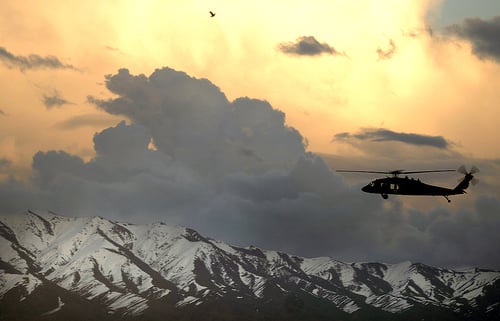
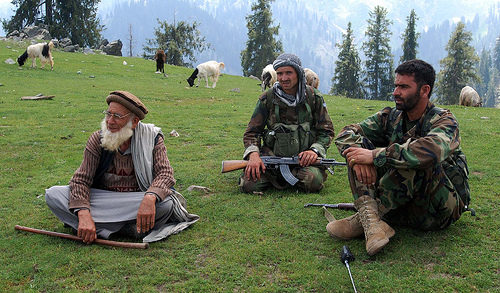
Photographs of modern-day Afghanistan - used by permission of www.army.mil
The Mujahideen and Taliban's effect on Afghan Sikhs and Hindus
The Mujahideen, and
Taliban in particular, were bad news for the Afghan Sikhs and Hindus.
The Mujahideen and in particular the Taliban, took quite a different attitude from the traditional Afghan tolerance. The Taliban was very hostile to Sufism, and even the Shi’a branch of Islam. The Hindus and Sikhs were beyond the pale, and were condemned as Kaffir, or unbelievers.
As Dr Roger Ballard, a Professor of Anthropology specialising in this area of Asia said:
In the Islamic Emirate of Afghanistan which they claim to have brought into existence, they took the view that only two options were available for the unbelieving polytheists; either convert to the true faith, or be eliminated.
There were moves not
only to suppress Sikhs and Hindus, but to make them wear yellow
badges in order to identify themselves as non-believers. Violence, kidnapping, abuse, and general persecution were common, as was forced conversion to Islam for young women and girls, followed by marriage to local Muslims
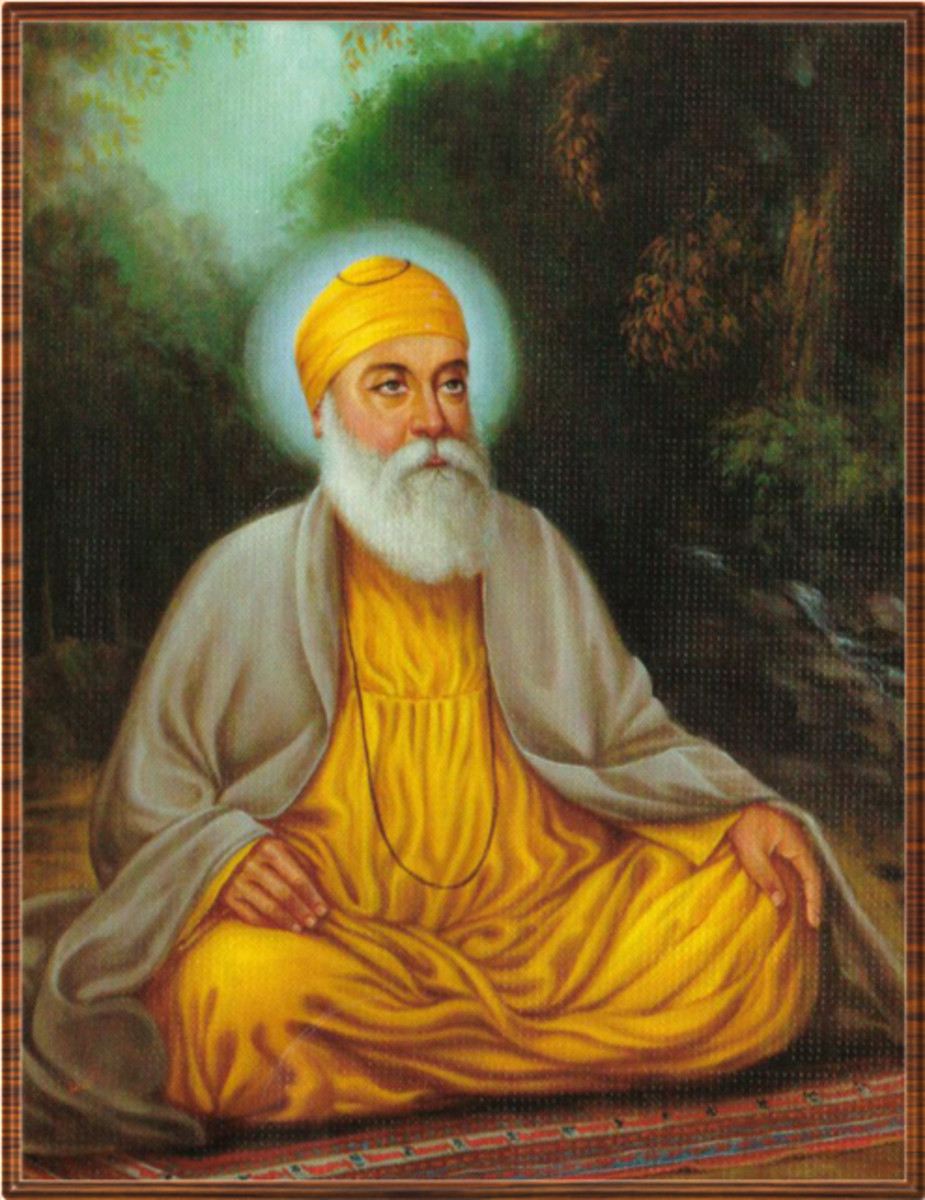
Guru Nanak's birthday celebrated in Kabul in 2006
Gurupurb celebration in Kabul's Gurdwara, 2007
Afghan Sikhs and Hindus today
The number of Sikhs and Hindus in Afghanistan today is unclear. There may be between 2000 and 3000 living there. They continue to live in the cities and provinces of Afghanistan where they have historically been based.
Communities were mainly based in the cities, particularly Kabul, Jalalabad, Kandahar, Ghazni, and the Kunar province. Other communities lived in Kunduz and Khost.
Before the fighting in Kabul, there were approximately eight Sikh and four Hindu temples in Kabul. They were either destroyed or used as military or army basis. Today there are three Gurdwaras in Kabul, but only one is structurally sound. In Jalalabad, there are two Sikh temples and one Hindu temple, but they are not in particularly good repair.
Sikh and Hindu children have been unable to attend government schools, as they have been harassed by both teachers and pupils. There is a Sikh school in Kabul, but it only has one teacher for a 120 students, and is run and funded by the Sikh community.
Unlike, for example, in India, the Hindu and Sikh communities are very closely integrated. They frequently live together, and even share temples. The situation for the two groups is very similar.
The communities have particular problems reclaiming land which has been occupied by various militia commanders, and in burning the dead.
Many Muslims regard the Sikh and Hindu practice of cremating the dead to be blasphemous, and there has been violence and difficulties when Sikh and Hindu people die.
Those Afghan Sikhs born since the mid 1970s have experienced a much more insular life than their parents and grandparents. It is common for older Sikh and Hindu men and women to speak local Afghan languages fluently.
In the case of many younger people, they speak only Punjabi, as it has never been safe for them to attend government run schools or associate with local Muslim Afghans. This is particularly true of younger Afghan women.
Almost all of Afghanistan's Sikhs and Hindus have, by now, left the country. Most of them have made their way to India, where they live as semi official refugees but have a great deal of trouble getting any form of permanent status. Others travelled either to America or to European countries in order to try and establish themselves as refugees.
Afghan Sikhs and Hindus were generally easily identifiable. In terms of appearance, they were often darker skinned than many Afghans, and the men, particularly the Sikhs, wore the traditional turban, did not cut their hair, and grew long beards. The women did not tend to cover up as comprehensively as Muslim women did.
The Afghan Sikh and Hindu Diaspora
London has a particularly large Afghan Sikh community. Many live fairly close together in an area near south-west London called Hounslow.
The community there has raised funds, and built an Afghan Sikh temple. It is not the case that non Afghans may not attend, but the vast majority who do attend are Afghans. There are also cultural and community centres near the Gurdwara (Sikh temple).
Afghan Sikh and Hindu communities in London have continued to huddle together for support.
It is very common within the culture for marriages to be arranged, rather than to be entered into spontaneously. There was a very strong habit of marrying within close family, particularly first cousins on one or more sides. It is not uncommon to meet a family where grandparents, parents and children are all the product of close cousin marriages.
Living in London, the community has generally tried to establish itself as well as possible. Both genders, but particularly men, have put considerable effort into learning English.
Continuing the commercial habits long-established, the men tend to enter various types of trading businesses, particularly shops.
Recent reports on Afghanistan
- United Nations report on human rights in Afghanistan
This is the latest (Feb. 2009) report of the High Commissioner for Human Rights, in relation to Afghans' rights and abuses of power. - International Religious Freedom Report 2008
The USA's Bureau of Democracy, Human Rights, and Labor does yearly reports on religious freedom around the world. This is the most recent (2008) report in relation to Afghanistan. - CIA - The World Factbook -- Afghanistan
The CIA's factbook includes facts and figures in relation to the population, health, economy, and many other aspects of Afghanistan. - US Department of State Report on Afghanistan
This report, dated November 2008, includes current information about Afghanistan's history, geography, population, institutions, and security situation. - Afghanistan Country Study - Religion
A detailed look at Afghanistan's religious history and associated development.
Those few who remain in Afghanistan - their future
The future for those Afghan Sikhs and Hindus who remain in Afghanistan is not necessarily particularly good. As Dr Ballard put it, after the overthrow of the Taliban regime:
Many hoped that it would lead to the restoration of the status quo ante - perhaps even back to the conditions in the halcyon days prior to the Soviet occupation in 1979. In those circumstances a significant number of those who had sought refuge oversees – Muslims, no less than Sikhs and Hindus – returned to Afghanistan in the hope of building a better future in what had once been a relaxed and beautiful country.
Those desires and hopes have often been dashed. Afghanistan’s better future lies some way off.
The regime of President Karzai, is relatively liberal in its outlook. But it has shaky claims to legitimacy, and must stay in with those who are more fundamentalist in outlook. The neo-Taliban and various warlords continue to encroach upon the government’s power.
Given the inherent fragility of Karzai’s regime, protection of the country’s religious minorities is near the bottom of the priority list, and is particularly difficult to achieve when he needs to maintain the support of often very fundamentalist Islamic allies.
There appears to be quite a strong level of societal discrimination and harassment. Random violence is offered against Sikhs and Hindus, pupils are harassed if they go to school, and other issues become very difficult.
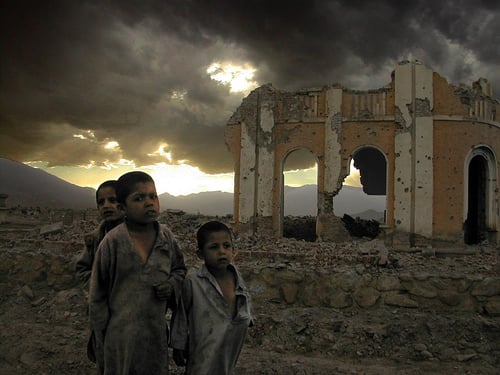
Afghan families in Kabul
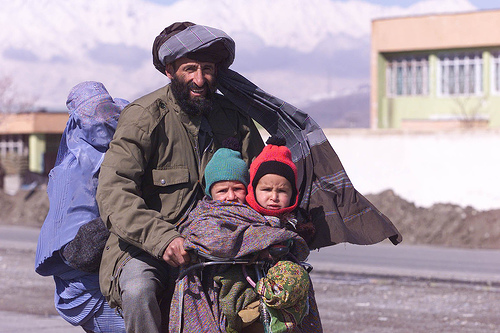
The future does not look good
As Dr Ballard has put it:
Like an ever increasing number of countries which have been propelled into modernity as a result of armed external intervention, Afghanistan’s past currently looks much brighter than its future.
When States fail in this way, only those with the good fortune to belong to well armed majorities can expect to enjoy any degree of personal security. Minorities have a hard time, to put it at its very mildest. The Sikhs and Hindus are one such minority.
There were very high hopes when the Taliban regime was toppled, and there was a window of opportunity for a better Afghanistan to be built. That window has proved to be a false dawn, and the state of Afghanistan has fallen back into armed warlordism and tribal conflict.
Sad is it may appear, the future of the Afghan Sikh and Hindu populations appears to be, at least for the moment, outside the country.